Proxy Marriage in Cuba: Complete Legal Guide & Requirements for 2026
Proxy marriage in Cuba is a legal arrangement that allows one of the parties to get married without being physically present at the ceremony.
This party, known as the principal, grants a special power of attorney to a legal representative, or agent, who acts on their behalf during the formalization of the marriage.
This type of proxy marriage is recognized under Cuba’s Law No. 51 on Civil Status Registration, which establishes in Article 65 that a marriage may be formalized through an authorized representative if one of the parties resides in a location different from where the marriage is being celebrated.
This option has become a practical and legitimate solution for couples who are separated by geographic, professional, or immigration-related circumstances.
It is particularly useful for Cuban citizens living abroad who wish to marry someone in Cuba, as well as for foreigners who want to formalize their marriage to a Cuban citizen without having to travel to the island. Through this procedure, the marriage can be legally and securely formalized, ensuring that both parties, despite the distance, are legally married under Cuban law.
The New Family Code (Law 156/2022): A Transformation of the Legal Framework
A crucial element in understanding proxy marriage in Cuba is the New Family Code (Law 156/2022), which replaced the former 1975 Family Code and represents a major modernization of family law in the country.
Although the proxy marriage procedure remains governed by Law No. 51 on Civil Status Registration, the new code introduces changes that have a direct and significant impact on civil marriage in general, including this type of marriage.
The New Family Code recognizes a variety of family structures and, historically, legalizes same-sex marriage, a right that was not previously recognized under Cuban law.
This means that proxy marriage in Cuba now also applies to same-sex couples, thereby expanding the scope of this legal option.
In addition to recognizing greater family diversity, Law 156/2022 introduces a major change in how couples manage their assets.
Unlike the previous system, which required a mandatory “community property” regime, the new law allows couples to choose between separate property and community property through a marital agreement.
This legal modernization goes beyond the wedding ceremony itself and directly affects the legal and financial security of the spouses.
By allowing couples to keep their assets separate, Cuban law gives them greater autonomy over how they manage their property, which can be particularly relevant when one spouse is a foreign national who owns assets or property abroad.
A comprehensive guide should emphasize the importance of considering and formalizing this agreement before the marriage, as it directly affects how the couple’s assets will be managed and divided in the future.
Requirements for Proxy Marriage in Cuba
Document and Eligibility Requirements: A Comprehensive Guide
To complete a proxy marriage in Cuba, it is essential to meet a series of requirements and provide the proper documentation. The complexity of the process lies in the legalization and translation of the required documents, which requires careful attention to detail to avoid delays or complications.
Documentation for the Absent Spouse (Principal)
The central document in the entire process is the Special Power of Attorney. It must be granted by the spouse who is not in Cuba, preferably before a Cuban consul in their country of residence. If it is executed before a local notary public, it must be properly legalized for use in Cuba.
The power of attorney must include the full legal names and personal information of both parties and the authorized representative, and it must expressly authorize the representative to legally formalize the marriage.
In addition to the power of attorney, the person granting the power must provide a valid passport, birth certificate, and a document confirming their current marital status, such as a certificate of single status, divorce decree, or the death certificate of a previous spouse.
All documents issued outside Cuba must be officially translated into Spanish and properly legalized, either through the Cuban consulate or by obtaining a Hague Apostille, depending on the country where the documents were issued.
The legalization process, especially in countries such as the United States, involves several steps: documents must first be authenticated at the state level, then at the federal level, and finally legalized at the Cuban consulate.
Documents Required for the Authorized Representative, the Partner in Cuba, and the Witnesses
The authorized representative, who will act on behalf of the partner who is unable to be present in Cuba, only needs to present a valid government-issued ID. This person can be a family member, a trusted friend, or even a professional such as an attorney or legal representative, as long as they are at least 18 years old.
The party to the marriage who is in Cuba must present their identity card (the Cuban passport is not valid for this procedure), a birth certificate if necessary, and their civil status certificate.
En el caso de un contrayente extranjero residente en Cuba, se requiere su pasaporte vigente, la visa y sus documentos de estado civil legalizados.
Two witnesses are required during the marriage ceremony. Both must be at least 18 years old and must present valid identification.
It is important to point out an apparent contradiction in the regulations. While the authorized representative may be an immediate family member, the witnesses cannot be relatives of the parties to the marriage within the second degree of consanguinity.
This distinction is crucial to ensuring the validity of the act: the proxy acts on behalf of the absent spouse, while the witnesses attest to the act itself. The prohibition against witnesses being related to the parties limits the options and requires careful planning.
Therefore, applicants are advised to verify this requirement with the specific notary office to avoid surprises on the day of the ceremony.
Step-by-Step Procedure for a Proxy Marriage in Cuba: Timeline and Paperwork
A proxy marriage in Cuba requires careful planning and should ideally follow a strict timeline to avoid unnecessary delays.
Process Timeline
- 30–45 days before the wedding:
This is the starting point. Contact the Cuban consulate in the country where the absent partner resides to obtain the most up-to-date requirements and the official power of attorney form. This is also the time to gather the required birth and marital status certificates and prepare the Special Power of Attorney before a notary public or the Cuban consul. - 20–30 days before the wedding:
Proceed with the legalization or apostille of the Power of Attorney and the other required personal documents. - 15–20 days before the wedding:
The legalized Power of Attorney and original documents must be sent to Cuba. To ensure their safe delivery, it is recommended to use a secure courier service or diplomatic pouch. The authorized representative should confirm receipt in Cuba in a timely manner. - 10–15 days before the wedding:
Once the authorized representative has all the required documents, they must visit one of the offices of the International Legal Consultancy (CJI) or a Specialized Legal Services Firm in Cuba. At the notary office, the authorized representative requests an appointment, submits the complete file with all required documentation, and schedules the official marriage date. - Wedding Day:
The authorized representative appears at the notary office or the agreed-upon ceremony location together with the witnesses. They sign the marriage certificate on behalf of the absent spouse, formally completing the marriage before a Civil Registry official.
After the Marriage:
For the marriage certificate to be legally recognized in the country where the absent spouse resides, the document must be legalized by Cuba’s Ministry of Foreign Affairs. It may then be submitted to the appropriate consulate for further recognition.
Visit this link to learn more about the legal requirements for getting married in Cuba in 2026.
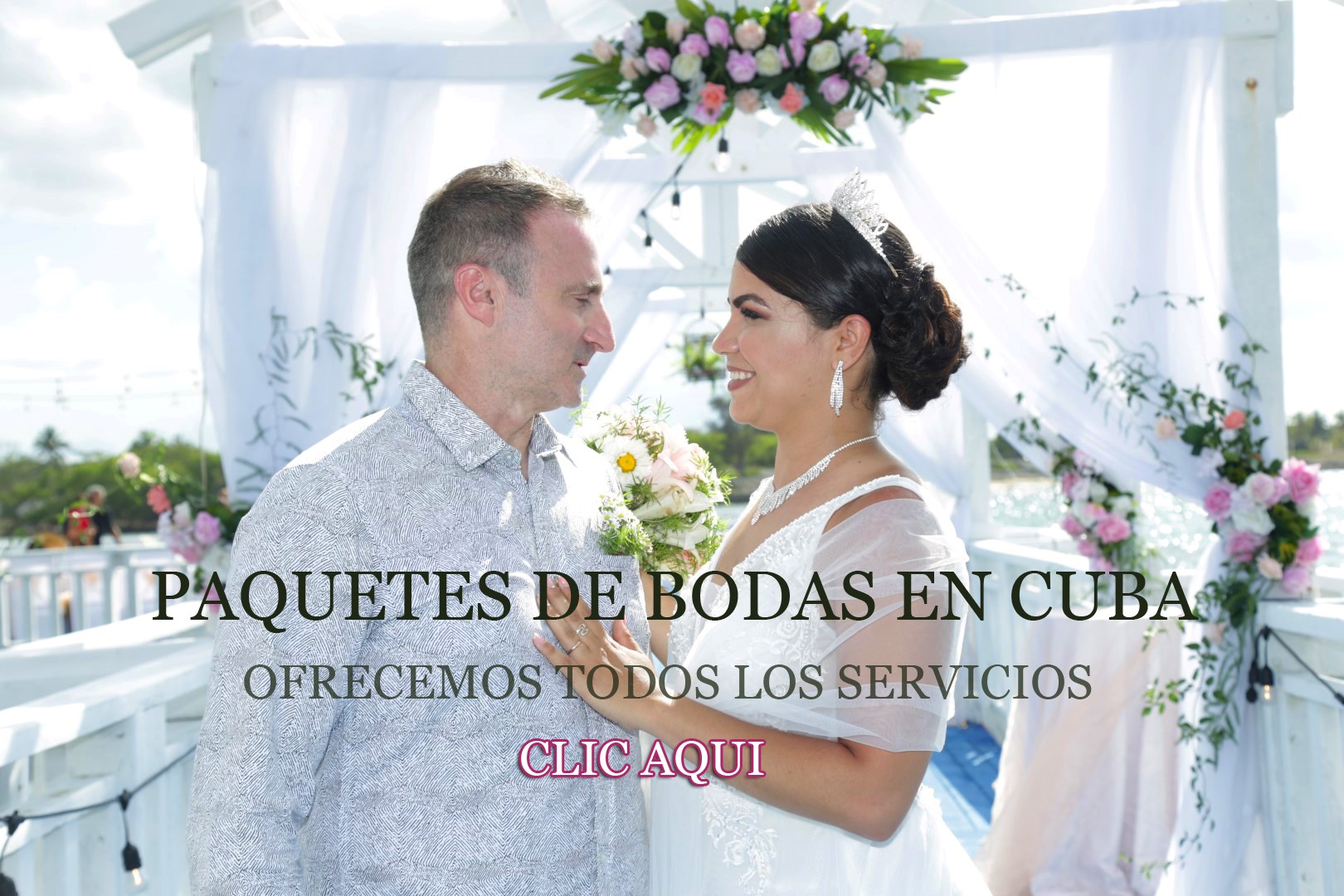
Get Married at Hotel Nacional de Cuba. We offer a full range of event planning and wedding services. Explore our wedding packages.
Detailed Cost Breakdown for a Proxy Marriage in Cuba
The costs associated with a proxy marriage in Cuba fall into two main categories: procedures completed abroad, which are generally priced in foreign currency, and procedures completed in Cuba, which are priced in Cuban pesos (CUP).
This segmented pricing structure reflects the different costs associated with handling documents and legal procedures abroad versus those carried out in Cuba.
The fees for marriages between Cuban citizens and foreign nationals are considerably higher than those for marriages between two Cuban citizens. This difference is reflected in the official fees and expenses associated with the respective procedures.
Below is a breakdown of the estimated costs for a proxy marriage in Cuba, based on the information currently available:
Table 1: Estimated Costs for Consular and Notarial Procedures Abroad
| Type of Procedure | Approximate Cost |
| Notarization of the Power of Attorney Abroad | USD 100–300 |
| Legalization at the Cuban Consulate | Approximately USD 150 |
| Official Translation (if required) | USD 50–100 |
| Legalization of Documents (certificates) | USD 30–60 per document |
Table 2: Marriage Formalization Fees in Cuba (CUP)
| Type of Procedure |
Cost |
| Formalization of a Marriage Between a Cuban Citizen and a Foreign National (at the notary office) | 13,125 CUP |
| Formalization Outside the Notary Office (during business hours) | 2,500 CUP |
| Formalization Outside the Notary Office (outside business hours) | 3,750 CUP |
| Expedited Service (within 24 hours) | 1,875 CUP |
| Certification and Filing of Documents (per document) | 2,500 CUP |
| Stamp Duty (per notarized document) | 125 CUP |
| Legalization of Documents at MINREX | 375 CUP |
It is important to keep in mind that fees quoted in Cuban pesos (CUP) may be subject to changes and fluctuations due to Cuba’s economic situation. Therefore, it is strongly recommended that you verify the current costs directly with the relevant government authority when you begin the application process.
Critical Considerations and Expert Recommendations
The success of a proxy marriage depends on careful planning and avoiding common mistakes. The following points are essential to help ensure a smooth process and prevent unnecessary delays.
Common Mistakes to Avoid
- Expired Documents: Civil status certificates issued abroad are generally valid for 6 months. Submitting an expired document is a common mistake that can invalidate the application or cause the process to be rejected. It is therefore essential to request these documents at the appropriate time.
- Missing Legalization: The Special Power of Attorney and personal documents must be properly legalized or apostilled in the country where they were issued in order to be valid for use in Cuba. Without this step, the documents may not be legally recognized in Cuba.
- Incorrect Information: Any discrepancy, even a minor one, in the personal information shown on different documents—such as a name or date—can delay or stop the process. It is essential to carefully review every detail before submitting the documents.
Advice for the Authorized Representative and Legal Counsel
Choosing the right authorized representative is one of the most important factors in ensuring that the process goes smoothly. It is not enough for the person to be a family member or friend; they should be responsible, organized, and able to manage the required documents and deadlines.
If you do not have a trusted representative in Cuba, you may consider hiring a specialized law firm, such as the International Legal Consultancy (CJI) or a Specialized Legal Services Firm.
These organizations are equipped to handle the required documentation and help ensure that all procedures are carried out in accordance with Cuban law.
Other Recommended Articles and Sections
Civil Marriage in Cuba: Requirements and Documentation
Varadero Beach Wedding Packages


